





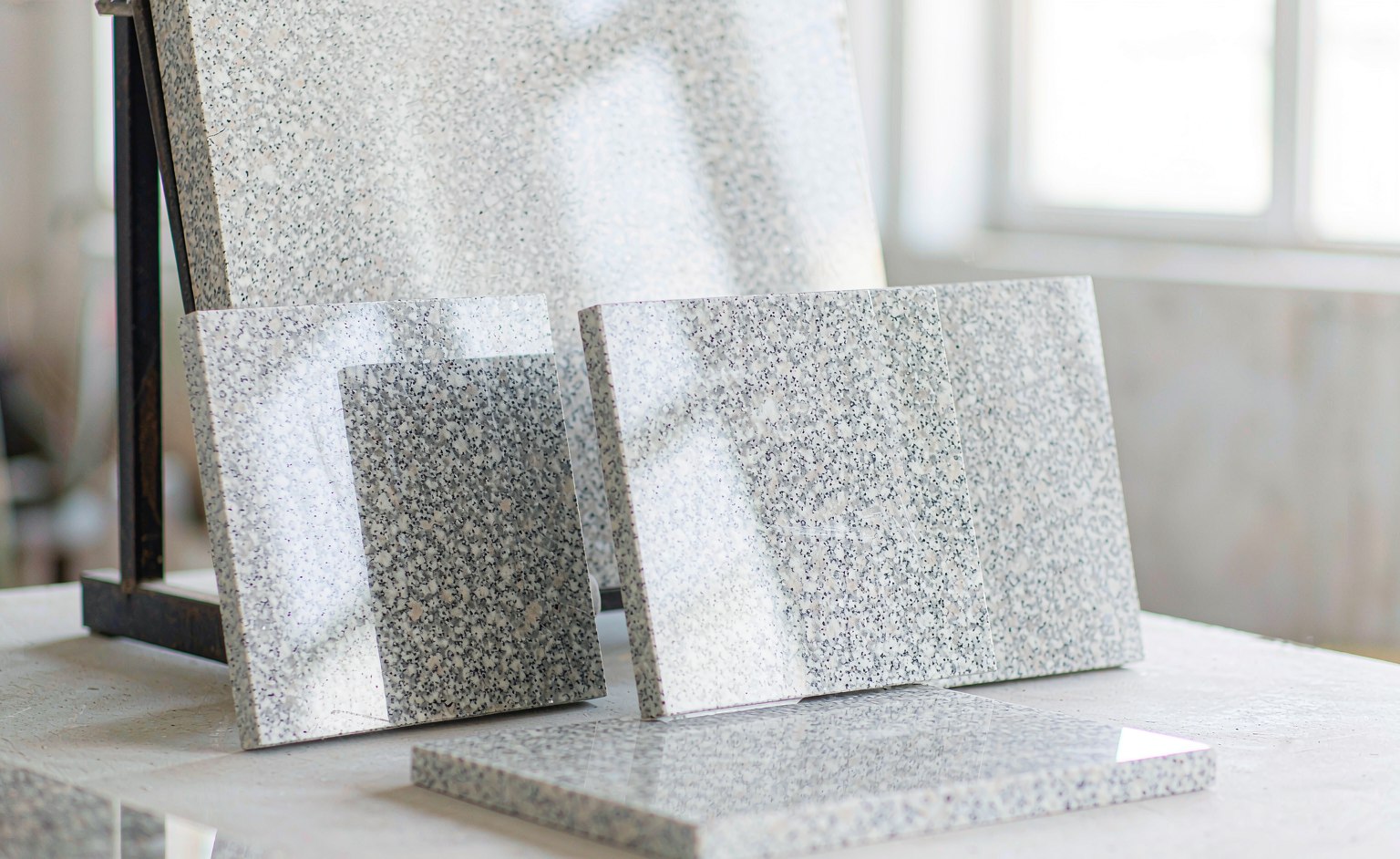
A G603 sample card looks innocent on a desk: 100 x 100 mm of polished white granite, fine grey speckle, clean edges. Yet most disputes in white-granite sourcing start right here – not because the stone failed, but because nobody defined what “matching the sample” actually means. G603 white granite is quarried and processed at our own production base in Suizhou, Hubei, and after years of supplying it for facades and public plazas, we have learned that the approval chain – sample card, slab sample, golden sample, batch matching – is what protects both sides of the order. Here is how specifiers and buyers can run that chain properly.
Why White Granite Needs a Formal Approval Path
G603’s appeal is its quiet, uniform look: a light background with fine grey mineral speckle, a density of about 2.7 g/cm3, Mohs hardness of 6-7 and water absorption at or below 0.4 percent. But the very uniformity that makes it popular also makes small shade shifts visible. Two slabs can both be G603 and still read differently at a distance – one cooler and greyer, one warmer and milkier. On a large facade or a lobby floor laid from several containers, that difference is what owners notice. A formal approval path turns “I want G603” into a measurable, contractual reference.
Step 1: Read the Sample Card for What It Is
A sample card is the first handshake, and it has limits:
- It shows texture and mineral balance, not batch color. Treat it as proof of the species, not a shade target for the whole order.
- Check the finish. A polished chip and a honed or flamed sample of the same stone look nothing alike – approve the finish you will actually install.
- Ask for a dry, unfilled sample. Wet or resin-coated chips hide the true background tone.
Step 2: Ask for a Slab Sample from Current Production
A 300 x 300 mm piece cut from a slab that is actually in production tells you more than ten studio photos. It carries the real background tone, the real speckle density and the real finish quality. When we receive a sample request, we cut from stock of the same thickness and finish as the enquiry, so what travels to the client’s office is the material the container will hold – not a showroom piece polished years ago.
Step 3: Sign and Seal the Golden Sample
The golden sample is the single physical reference both sides treat as law. The routine we recommend:
- Choose the piece together from two or three slab samples, ideally under both daylight and the project’s indoor lighting.
- Sign or stamp the sample, photograph it against a neutral background, and record the block number, thickness and finish in a short approval note.
- Split the reference. One half stays on the production line, one with the client or site team, so every comparison is made against the physical piece – not a photo.
Step 4: Match Every Batch Against It
During production, each batch is compared against the golden sample under consistent light before packing. For projects split across several containers, we photograph each batch beside the golden sample and share the images before dispatch, so any drift is caught while panels are still in the yard. Because blocks are selected at our own quarry face, batches start close to each other; matching then confirms rather than rescues.
Step 5: Put the Approval into the Purchase Order
A golden sample only has teeth if the PO refers to it. One line is enough: “Color and finish to match the signed golden sample dated [date]; each batch to be approved by photo comparison before dispatch.” Add the tolerance you can accept and the inspection method, and sample approval becomes part of the specification instead of a courtesy between emails.
Common Mistakes That Cost the Most
- Approving from a phone photo of one slab, then holding the whole order to that single frame.
- Mixing finishes between approval and order – honed sample, flamed delivery.
- Skipping batch photos on multi-container projects and discovering the drift at installation.
- Storing the golden sample in direct sunlight for years, then comparing against a faded reference.
None of these are stone problems – all are process problems, and all are avoidable with the chain above.
Start the Chain with a Sample Request
Suizhou Xuhui Stone produces G603 white granite from its own quarry through its own workshop, with GB 6566 Class A classification for indoor use and freeze-thaw performance beyond 200 cycles for exterior work; the same approval chain applies to our G682 golden granite facade and landscape orders. Send us your area, finish and thickness – we will courier a production slab sample for approval, and hold a golden sample against every container we pack for you.
Добавить комментарий