





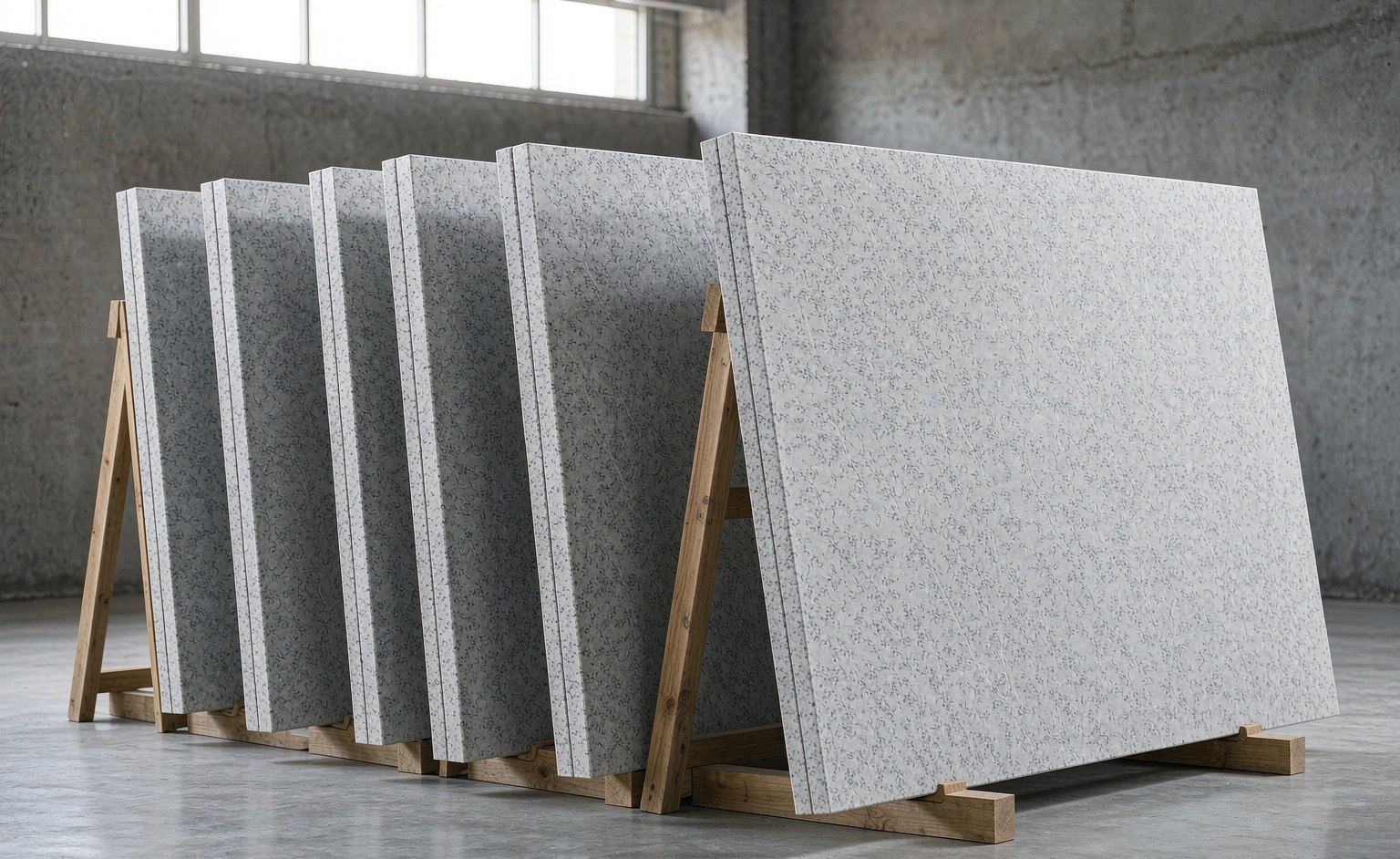
Sustainability targets have moved from the marketing page into the procurement file. Developers in the Gulf, Southeast Asia and beyond are increasingly asked by investors, tenants and local authorities to show how their buildings perform against green building standards such as LEED, BREEAM or local equivalents. For teams that want the look and longevity of natural stone without complicating the certification pathway, G603 white granite deserves a closer look.
First, a Correction: No Stone Is "LEED Certified"
This is worth saying plainly, because it protects you in front of consultants and auditors. LEED and similar frameworks certify buildings, not products. Nobody can sell you a "LEED-certified granite". What a material can do is contribute evidence towards specific credits at project level. The relevant categories for a granite like G603 are responsible sourcing and regional materials, embodied impact and life-cycle performance, and indoor environmental quality. A supplier who understands this difference will give you documents that actually survive review, instead of vague green claims.
Where G603 Earns Its Place in the Credit File
Green building rating systems generally reward materials that are durable, traceable and low-impact across their life cycle. G603 performs well on each point for practical reasons that have nothing to do with marketing:
- Durability and low replacement frequency. With a density of roughly 2.6 g/cm3, water absorption typically below 0.5 percent and compressive strength above 100 MPa, G603 keeps its dimensional stability and surface integrity for decades. A facade or plaza that does not need replacing is the cheapest environmental outcome there is.
- Reusability. Dimension stone is one of the few cladding materials that can be unmounted, re-cut and reused. At end of life it does not become mixed waste the way composite panels do.
- No VOC emissions. Natural granite releases no volatile organic compounds, which supports indoor air quality credits in lobbies, reception areas and other occupied spaces.
- Simple, documentable origin. A single-origin stone with stable chemistry is far easier to document than a blended or multi-source product.
Why the Source of the Stone Matters for Certification
G603 is quarried in Hubei province, China, and processed at our own factory in Suizhou, close to the quarry itself. For a developer chasing sourcing-related credits, that short, controlled chain is an advantage. The quarry and the factory are under the same management, so origin declarations, batch records and test reports all refer to one consistent material. Compare that with a trader who aggregates blocks or slabs from several unrelated sources: every added link in that chain makes traceability paperwork heavier and batch matching harder.
Indoor Applications and Radiation Safety
For interior use, the relevant Chinese standard is GB 6566, which classifies building materials by radioactive performance. G603 falls into Class A, the category permitted for unrestricted use in residential and public buildings. Combined with the fact that polished granite needs no chemical coatings to perform, this makes it a straightforward choice for hotel lobbies, airport halls, shopping streets and office ground floors where air quality and safety documentation come under scrutiny.
What to Request from Your G603 Supplier
If you are building a documentation pack for a certified project, ask for the following before you place the order. A quarry-direct supplier should produce all of it without friction:
- Laboratory test reports covering water absorption, compressive strength and freeze-thaw performance
- GB 6566 test certificate confirming Class A classification
- Written confirmation of origin and processing location
- Batch photographs of the actual production run, not stock photos
- Finish samples, since flamed, honed and polished faces of the same slab can read differently in daylight
Asking for these early also tells you a lot about who you are dealing with. Suppliers who are close to production answer quickly; intermediaries tend to go quiet.
Where G603 Fits Best in a Certified Project
In practice, G603 works hardest in three zones: exterior cladding where a light, even-toned stone keeps the facade calm and heat gains moderate, plaza and walkway paving in flamed finish for slip resistance, and interior flooring and wall features where its fine grey-white grain reads clean under artificial light. For projects that want warmth at the entrance or on feature walls, our own G682 golden granite from the same region pairs naturally with it, and both stones can be supplied under one order, one packing plan and one set of documents.
Green building scores are ultimately an argument, backed by evidence, that a building was put together responsibly. Natural stone with a short, controlled supply chain is one of the strongest pieces of evidence a developer can hold. If you are preparing a specification for a certified project and need test reports, finish samples or a loading plan for G603, send us your drawings and quantities, and our team will come back with documents and pricing within two working days.
Deja una respuesta