





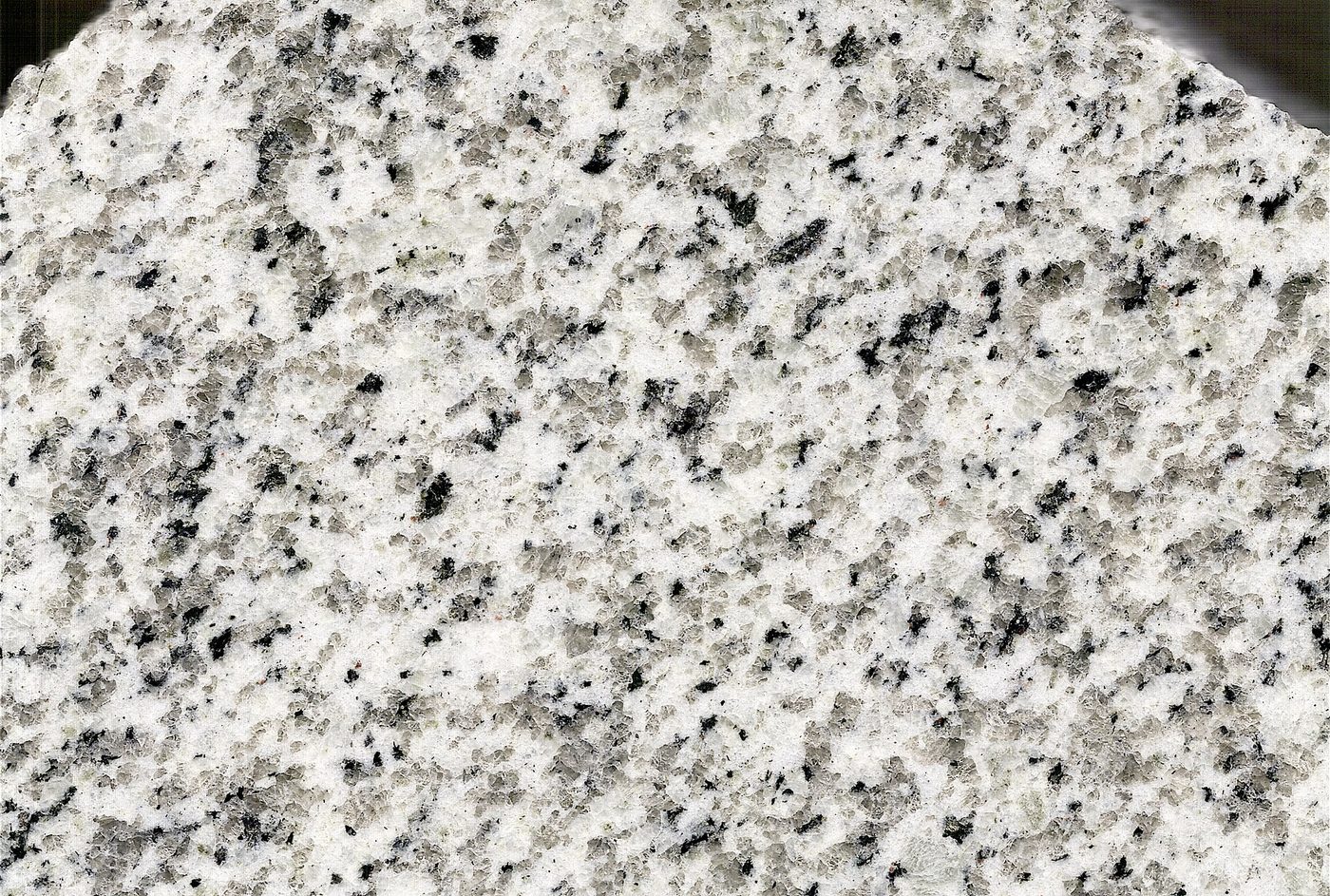
Buyers outside China often meet these two stones under different trade names and assume they are interchangeable. They are not competitors — they are siblings with different personalities. Both come from the same quarry belt in Suizhou, Hubei Province, and both carry the physical backbone of quality granite. But place sample panels side by side and the right choice for your project becomes obvious. This guide compares G682 golden granite and G603 grey-white granite across the criteria that actually matter when you specify.
Two Stones, Two Personalities
G682 (sold internationally as Golden Rust or Yellow Rust granite) shows a warm honey-yellow background with soft rust veining and variegated grain. It reads as decorative and inviting — the stone that makes a facade feel like a statement rather than a background. G603 (often listed as Grey White granite) is a fine-grained, uniform light grey that stays quiet even across very large surfaces. One is a protagonist; the other is a team player. Most specification mistakes happen when a buyer falls in love with one character and forces it into a role the other was born for.
G682: When the Facade Is the Statement
Choose G682 when the exterior needs warmth and character: villa exteriors, hotel entrances, feature walls, podium columns and mid-rise projects where the facade is part of the marketing. The golden tone performs especially well under strong sunlight — one reason it remains a preferred cladding stone for Saudi Arabia and the UAE, where pale facades can look washed out at noon. Rust veining also helps the stone age gracefully: minor weathering blends into the pattern instead of standing out.
G603: The Workhorse of Large-Scale Projects
G603 earns its place on projects measured in tens of thousands of square meters. Its uniform grey reads as clean and neutral, pairs easily with glass and aluminium curtain wall systems, and — critically for procurement — delivers batch-to-batch consistency across long production runs. It is equally at home in municipal squares, pedestrian streets, plaza paving and campus landscapes, where flamed G603 provides reliable slip resistance and a calm, orderly look that landscape architects specify again and again.
Side-by-Side Comparison
| Criterion | G682 (Golden Granite) | G603 (Grey White Granite) |
|---|---|---|
| Color | Honey yellow with rust veining | Light grey, near-white |
| Grain | Medium, variegated | Fine, uniform |
| Design role | Feature facades, villas, columns | Large cladding, plazas, paving |
| Tone | Warm, decorative | Neutral, quiet |
| Budget positioning | Standard | Economical at volume |
| Available formats | Slabs, cut-to-size panels, kerbs, cobbles, steps — both stones | |
Surface Finishes: Both Are Versatile
Both stones accept the full finish range — flamed, honed, polished and bush-hammered — which matters when one project mixes cladding and paving. Flamed G682 turns a lighter matte gold, ideal for exterior walls and non-slip walkways. Flamed G603 becomes a pale grey anti-slip surface that has finished public plazas worldwide. Honed finishes suit interior lobbies; polished surfaces bring out the stone’s depth for feature walls.
Technical Backbone: Same Quarry Standards
Aesthetics differ; physics does not. Produced from the same quarry belt, both stones deliver a bulk density of about 2.7 g/cm³, water absorption at or below 0.4%, compressive strength of 110–150 MPa, and Class A radioactivity classification under GB 6566 — the category with no usage restrictions. When a supplier offers both, you are choosing a look and a logistics profile, not trading away durability.
How to Decide
Three rules of thumb cover most projects. (1) If the facade needs to impress — villas, hotels, entrance features — specify G682. (2) If you need thousands of square meters of calm consistency on a controlled budget — residential curtain walls, plazas, municipal landscapes — specify G603. (3) On mixed developments, use both: G682 at the entrance and main elevation, G603 on side wings and hardscape. Because they share one quarry’s mineral palette, the two stones sit together naturally instead of clashing.
The Bottom Line
Suizhou Xuhui Stone quarrys and processes both stones in-house, from block selection through slab production and surface finishing, so batch consistency is controlled at the source rather than hoped for at inspection. If you are weighing the two for an upcoming project, request a sample kit containing both stones in your target finishes — seeing them under your project’s actual light settles the question faster than any datasheet.
Leave a Reply