





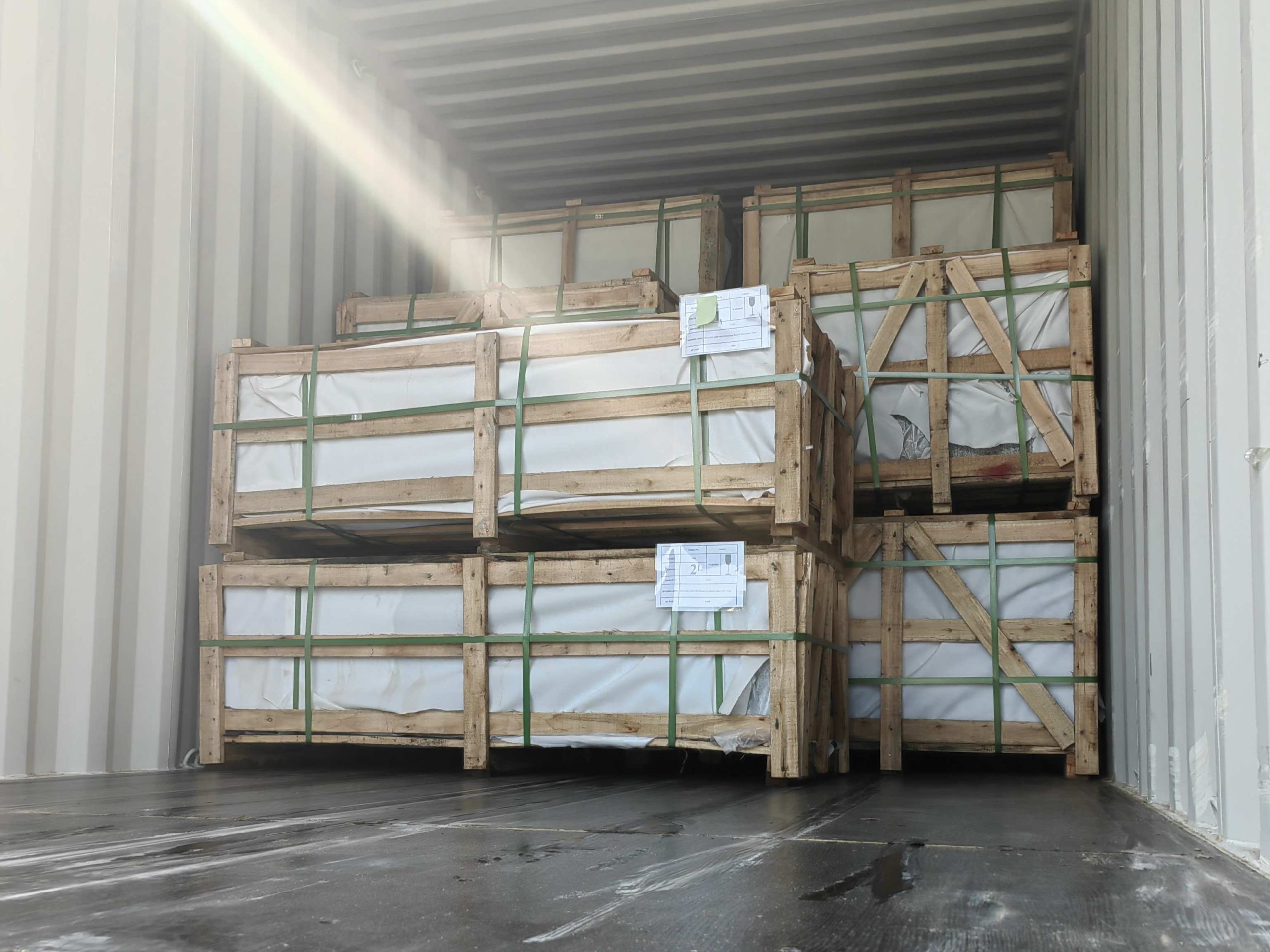
Granite is one of the hardest natural building materials on earth — but that does not mean it survives a rough ocean crossing undamaged. A 30mm G682 panel that weighs 90 kilograms per square meter can crack, chip, or stain in transit if it is packed improperly. For contractors importing to Jebel Ali, Port Klang, or Ho Chi Minh City, the difference between a container that arrives in perfect condition and one that requires damage claims starts with how the panels were loaded at the factory. Here is what proper export packing actually looks like — and what to demand from your supplier.
Why Granite Needs Specialized Export Packing
A 20-foot container loaded with G682 facade panels weighs 26–28 tons. During a 25–35 day sea voyage from Shanghai to the Middle East, the cargo is subjected to constant vibration, 15–20 degree rolling in swells, and temperature swings from 10°C in the hold to 60°C on the container roof. Without proper securing, panels shift, rub against each other, and crack. Edge chips from shifting crates are the most common freight damage claim — and the most preventable.
The Standard Export Packing Process
Reputable Chinese granite factories follow a consistent packing protocol for cut-to-size facade panels:
- Fumigated wooden A-frames (crates): Each crate holds 15–25 panels, stacked vertically in a steel-reinforced wooden rack. The wood must be ISPM-15 fumigated (marked with the IPPC stamp) to clear customs in destination countries.
- Foam and corner protection: Every panel edge is protected with foam strips or corner boards. Soft foam sheets are inserted between panels to prevent friction scratching during vibration.
- Steel strapping: Each crate is strapped to the container floor with minimum two steel bands, and crates are chained to the container’s lashing rings. This prevents the entire load from shifting in rough seas.
- Crates numbered and labeled: Every crate has a stenciled number, the project name, and a packing list inside the crate door. The contractor receives a matching packing list before the ship sails.
- Moisture barrier: A plastic sheet covers the crate stack to prevent salt air condensation from reaching the panels. Flamed G682 is relatively dense, but polished surfaces can develop water spots if moisture gets trapped.
What Can Go Wrong in Cheap Packing
When a factory cuts corners on packing, the damage usually shows up as one of three patterns:
Edge chipping: Caused by missing foam between panels or crates not strapped down. Minor chips can be repaired on site with color-matched epoxy, but chips on exposed corner details require panel replacement.
Surface scratching: Panels that rub together during transit leave fine white scratches on flamed surfaces. On polished G682 this is almost invisible; on flamed it shows as lighter streaks. The fix is re-flaming or re-grinding, which costs more than the panel itself.
Cracked panels: Usually the result of overstacking — putting too many panels in one crate so the bottom slabs bear too much weight — or crates not secured to the container floor. Cracks are non-repairable and require replacement panels.
What to Ask Your Supplier Before Shipping
Before your container loads, ask these four questions:
- Are the crates ISPM-15 fumigated and IPPC-stamped? (Required by Saudi customs, UAE, and most Southeast Asian countries.)
- How many panels per crate, and what is the maximum weight per crate? (More than 2 tons per crate is risky for 30mm panels.)
- Can I receive pre-loading photos showing the crates inside the container, including the steel strapping? (Any serious factory will send these free of charge.)
- What is the claims process if panels arrive damaged? (The supplier should commit to replacing damaged panels in the next container, not offering a 5% credit.)
Unloading and On-Site Storage
Good packing only gets the container to the port safely. How you unload and store the panels on site matters just as much:
- Use a forklift with rubber-coated arms or a crane with a stone clamp — never hook the crate with bare chains that can cut the wood.
- Store crates upright on level ground, never flat on their side. Keep the A-frame angle at 80–85 degrees, matching how they were packed.
- Cover crates with a tarp if stored outdoors. Rainwater on exposed panel edges can cause water staining that is difficult to remove from flamed surfaces.
- Keep crates off wet ground by placing them on wooden pallets or sleepers.
Our Packing Standard at Xuhui Stone
Every G682 container we ship uses ISPM-15 fumigated A-frame crates, foam between every panel, steel strapping to the container floor, and numbered crates with a printed packing list. Before the container leaves the factory, our QC team photographs the loaded container — wide shots showing the crate arrangement, close-ups of the strapping, and a photo of the crate number labels — and sends them to the customer for confirmation. We also include 3–5% spare panels in every shipment, packed in their own crate, so that any transit damage can be replaced immediately without waiting for the next container. If you are evaluating G682 suppliers for a Gulf or Southeast Asian project, ask your current supplier for pre-loading photos of their last container — the quality of the packing will tell you more than any product brochure.
اترك تعليقاً